
What Is SRO 2023? Solicitors Remuneration Order Malaysia

A junior associate walks into the managing partner’s room. “The client is asking for a 30% discount on the SPA fee. Can we give it?”
The partner pauses. The answer is not “yes” or “no” — it is “it depends on which schedule, which table, and whether it is a discount or a waiver, because those are two different things with two different sets of rules.”
That exchange, in one form or another, happens in conveyancing practices across Malaysia every week. And the fact that it keeps happening tells you something: the Solicitors Remuneration Order 2023 is not a document most lawyers have read end to end. They know the scale fees. They may know the 25% cap. But the full picture — what is included in prescribed fees, where discounts are permitted, what a waiver actually requires, and what happens when a firm gets it wrong — is something many practices have never sat down and worked through.
SRO 2023 in brief
SRO stands for Solicitors Remuneration Order. SRO 2023 is the subsidiary legislation, made under the Legal Profession Act 1976, that prescribes the fees Malaysian advocates and solicitors charge for non-contentious work — property sales and transfers, leases and tenancies, loan and security documents, discharges, and a list of miscellaneous documents. It has been in force since July 2023, replaced the SRO 2005 (as amended), and remains the order in force today: there is no SRO 2024, 2025 or 2026.
Official text: Solicitors Remuneration Order 2023 (PDF, Malaysian Bar). To compute a fee under it, use the SRO 2023 fee calculator.
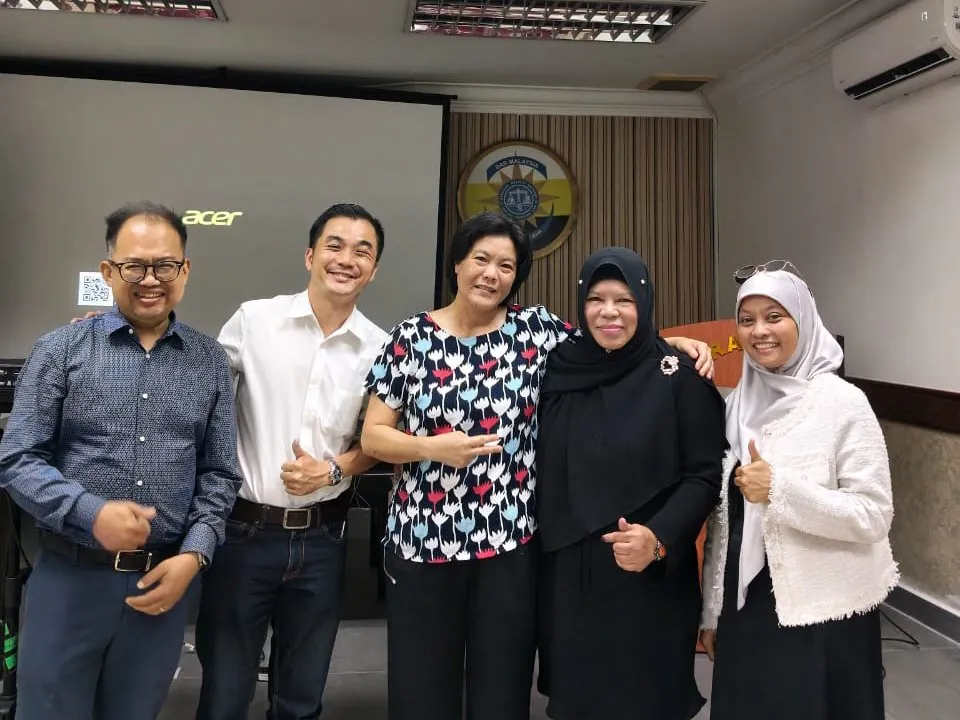
This article does that. It is based on a CPD talk by Puan Norhayati Mohamed at the Perak Bar, where she walked through 29 “Decodes” of SRO 2023 — practical scenarios that test how well you actually understand the rules.
Why Legal Fees Are Regulated in the First Place
The Solicitors Remuneration Order exists to protect two sides.
The public — so that a first-time homebuyer in Taiping knows exactly what the legal fees will be for a RM400,000 house. No surprises, no overcharging, no guesswork.
The profession — so that lawyers are not dragged into a race to the bottom. Conveyancing is hazardous work. The solicitor takes on risk at every stage, from the pre-contractual due diligence to the post-completion registration. If that risk is passed to the solicitor, the solicitor must be sufficiently remunerated for undertaking it.
The Bar Council’s position — shared by other professional bodies — is that legal services are intellectual and creative products, not commodities. The primary purpose of scale fees is to set a benchmark for reasonable remuneration, commensurate with professional services of an acceptable and recognised standard.
A “free market” for conveyancing fees sounds appealing in theory. In practice, it is too tempting for clients to seek out the cheapest solicitor, sidelining the question of quality — especially when that quality is not immediately or easily discernible. “Shopping around” for cheaper fees leads to widespread undercutting. And when fees are uneconomic, the quality of professional services rendered is compromised. That is not a hypothetical — it is an observable pattern.
What “Non-Contentious” Means — and Why It Matters
SRO 2023 governs non-contentious business. But what does that mean?
There is no definition of “non-contentious business” in SRO 2023 or the Legal Profession Act 1976. It is defined by exclusion. Section 3 of the LPA 1976 defines “contentious business” as business done by an advocate and solicitor in or for the purpose of proceedings begun before a court, tribunal, board, commission, council, statutory body, or arbitrator.
Non-contentious business is everything that is not contentious.
This distinction matters in edge cases. Consider a solicitor acting for the purchaser to complete a transaction in which the purchaser was the successful bidder at a sale by auction pursuant to an order for sale under section 256 of the National Land Code. Is that contentious or non-contentious?
The application for the order of sale is proceedings begun in a court — that is contentious. But the successful bid marks the end of the court proceedings. The completion of the transaction after the bid is no longer part of court proceedings. It is non-contentious, and the SRO applies.
What Is Included in Prescribed Fees — and What Is Not
Order 3 of SRO 2023 spells out the composition of remuneration. Getting this wrong is one of the most common sources of billing disputes.
Prescribed fees include:
- Allowances for the time of the solicitor and the clerk, and all usual and necessary attendances
- Charges for normal copying and stationery
That second point trips people up. It is very common to see solicitors’ bills that include RM100–RM200 for photocopying and printing charges as a separate line item. Under Order 3(2), normal copying is already included in the prescribed fee. Billing it separately is double-charging.
Prescribed fees do not include:
- Stamp duties
- Registration fees payable on documents requiring registration
- Fees paid on searches and costs of extracts from any register or record
- Counsel’s fee, auctioneer’s fee, or valuer’s fee
- Travelling or accommodation expenses
- Other disbursements reasonably and properly paid or incurred (which must be itemised in any bill)
- Cost of any extra work
- Fee relating to any proceedings in court
- Miscellaneous expenses not exceeding RM100
The miscellaneous RM100 is a catch-all for items like telephone calls, faxes, courier charges, and postage — but only where the solicitor cannot itemise the individual amounts. If all disbursements are properly itemised, a solicitor cannot add a separate RM100 miscellaneous charge on top.
And a critical point from BC Ruling 16.01(3): disbursements billed but not actually used must be returned. If a solicitor bills RM200 for travelling and RM50 for photocopying, but only RM80 was actually paid for travel and no photocopying was done, the balance of RM170 goes back to the client. The solicitor cannot transfer unused disbursements to the office account.
The Six Schedules at a Glance
SRO 2023 organises fees into six schedules. Each one governs a different category of transaction:
| Schedule | What It Covers | Fee Type |
|---|---|---|
| First | Sale, purchase, transfer of immovable property | Scale fee (Table A: based on consideration or adjudicated value) |
| Second | Lease and tenancy | Scale fee (based on monthly rent) |
| Third | Charges, debentures, and other security or financing documents | Scale fee (Table A: based on amount secured or financed) |
| Fourth | Discharge of charge and deed of reassignment | Fixed fee (RM400 first title, RM100 each additional) |
| Fifth | Miscellaneous documents (witnessing, CKHT forms, consent applications, caveats, etc.) | Fixed fee per item |
| Sixth | Non-contentious work for which no scale or fixed fee is specified | Fair and reasonable, assessed on seven factors |
The first five schedules prescribe either a scale fee (calculated from the transaction value) or a fixed fee. The Sixth Schedule is the catch-all — it governs everything that does not fit into the first five.
Understanding which schedule applies to your transaction is the first step. The second step is knowing whether any discount is permitted — and in most cases, it is not.
Discounts — The 25% Rule
Order 5 of SRO 2023 permits a discount of up to 25% on fees specified in:
- Table A of the First Schedule (sale and transfer)
- Table A of the Third Schedule (charges and financing documents)
That is it. No discount is permitted on:
- Table B of the First Schedule
- The Second Schedule (lease and tenancy)
- Table B of the Third Schedule
- The Fourth Schedule (discharge and reassignment)
- The Fifth Schedule (miscellaneous documents)
- The Sixth Schedule
This is stricter than it sounds. A solicitor who gives a 10% discount on a tenancy agreement fee is not being generous — the solicitor is in breach of SRO 2023.
The change from the previous SRO is worth noting. Under the old order, the 25% discount applied to fees in the First and Third Schedules generally, except for HDA transactions. SRO 2023 narrows it to Table A only in both schedules. If your firm’s Excel calculator was built under the old SRO, the discount logic is wrong even if you think you updated the scale fees.
If you need to see how these discounts affect a specific transaction, use the SRO 2023 fee calculator — it applies the 25% cap automatically.
Can a Solicitor Charge More Than Prescribed Fees?
SRO 2023 prescribes fees that are also the maximum. But there are two exceptions.
Order 4 — Special exertion. Where business is required to be carried through by special exertion in an exceptionally short space of time, the solicitor may charge additional remuneration for the special exertion according to the circumstances.
Section 114 of the LPA 1976. A solicitor may make a written agreement on remuneration for any non-contentious business, provided that the cost shall not be lower than the SRO prescribed fees. The agreement may provide for payment by a gross sum, commission, percentage, salary, or otherwise. It may also specify whether remuneration includes disbursements.
The key constraint on a section 114 agreement: the agreed fee cannot be lower than what the SRO prescribes. It is a floor, not a ceiling — unless you are already at the ceiling, in which case the agreement simply documents the standard fee.
Waiver of Fees — Not the Same as a Discount
The distinction between a waiver and a discount is one of the most misunderstood areas of SRO 2023. A discount reduces the fee. A waiver surrenders the fee entirely.
The current applicable guideline is BC Circular 295/2023, dated 16 October 2023. A solicitor may waive any fees due or chargeable under SRO, provided that:
- It is a full waiver, not partial — you cannot waive “half” of the fee
- It is a bona fide waiver — not a device or method used as a means to provide a discount
- The fact of the waiver and the particulars of the relationship or purpose are noted in the file
The circumstances under which fees may not be waived are specific:
- Subsidiary instruments under the Third Schedule — you cannot waive the fee for a subsidiary security document
- SPA and loan fees when acting for both — where a solicitor acts for the purchaser in the SPA transaction and also in the purchaser’s loan transaction, the solicitor may not waive either fee
- Proportion of cases in a property development — whether acting for the developer or purchasers, you may not waive fees in respect of a proportion of the cases handled
- Loan transactions for a financier — fees for any portion of loan transactions handled for a financier may not be waived
- Disbursements actually incurred — you may not waive disbursements that were in fact incurred, as that would result in a discount in effect being given
The practical implication: if a client asks you to “waive the fee” for one out of ten loan transactions you are handling for their bank, that is not a bona fide waiver. It is a device for a discount.
What Happens When a Firm Does Not Comply
Non-compliance with SRO 2023 is not just an administrative lapse. It is a professional misconduct.
Misconduct under Order 6. Overcharging or giving a discount not in compliance with Order 6 of SRO 2023 is misconduct.
Professional Indemnity Insurance may be voided. If a claim is made against a solicitor for civil liability, and it is discovered that a non-permitted discount was given in that transaction, the insurer may not respond to the claim. This is documented in BC Circulars 088/2011 and 100/2011. The PII cover is rendered void in respect of that particular transaction — meaning the solicitor bears the full liability personally.
Tax complications. A non-permitted discount may give rise to service tax complications (the SST base was the prescribed fee, not the discounted fee). It may also create income tax complications — the solicitor declared income lower than the prescribed fee without a lawful basis. And the economic advantage obtained by the client from the unlawful discount may constitute proceeds of an unlawful activity under the Anti-Money Laundering Act (AMLA).
Complaints under the Solicitors’ Remuneration Enforcement Rules. The SRER 2016 was established to ensure compliance with SRO, and was amended by the SREAR 2024. Rule 3(2) of the SRER (as amended) requires every solicitor to display the “no discount” signage in their office, containing specified wording in Bahasa Malaysia. Not displaying the signage is itself a breach.
The mandatory signage text begins: “Yuran guaman bagi transaksi harta tanah … adalah ditetapkan oleh undang-undang dan PEGUAM-PEGUAM TIDAK DIBENARKAN MEMBERI DISKAUN” — legal fees for property transactions are fixed by law and lawyers are not permitted to give discounts.
Where to Go From Here
This article covers the structure and compliance framework of SRO 2023. Two specific areas — the most discussed at the CPD talk — deserve their own deep dives:
- The Sixth Schedule — what happens when there is no scale fee for the work you are doing (loan agreements, corporate guarantees, love-and-affection transfers, and other Sixth Schedule matters)
- Aborted transaction fees — what you can charge when a transaction falls through, and who bears the cost
If your firm produces fee quotations manually, the SRO 2023 framework makes that increasingly risky. A conveyancing billing system that has the scale fees, discount rules, and schedule logic built in removes the arithmetic from the equation entirely — the same logic discussed in this article, applied automatically to every quotation your firm produces.
Still using an Excel calculator built before SRO 2023?
The discount rules alone changed between the old SRO and the current one. If your calculator does not distinguish between Table A and Table B, it is producing wrong figures — and your firm carries the compliance risk. See how automated SRO 2023 fee computation works in a conveyancing system built for Malaysian law firms.
Book a walkthrough →Frequently Asked Questions About SRO 2023
What does SRO stand for?
Solicitors Remuneration Order. It is the order, made under section 113 of the Legal Profession Act 1976, that fixes what a Malaysian advocate and solicitor may charge for non-contentious business. The current order is the Solicitors Remuneration Order 2023.
Where can I download the SRO 2023 PDF?
The Malaysian Bar publishes the full text: Solicitors Remuneration Order 2023 (PDF). The Bar also maintains an SRO 2023 hub page with the related circulars and enforcement rules.
Is there a newer SRO than SRO 2023 — an SRO 2024, 2025 or 2026?
No. SRO 2023 is the latest Solicitors Remuneration Order and is still the order in force. What has changed since is the enforcement side — the Solicitors' Remuneration (Enforcement) (Amendment) Rules 2024 (SREAR 2024) — not the fee scales themselves. A transaction completing in 2026 is quoted on the SRO 2023 scales.
Which schedule of SRO 2023 applies to my transaction?
First Schedule for sale, purchase and transfer of property; Second Schedule for leases and tenancies; Third Schedule for charges, debentures and other financing or security documents; Fourth Schedule for discharge of charge and deed of reassignment; Fifth Schedule for miscellaneous documents such as witnessing, CKHT forms, consent applications and caveats; Sixth Schedule for any non-contentious work with no scale or fixed fee.
Can a lawyer give a discount under SRO 2023?
Only up to 25%, and only on Table A of the First Schedule (sale and transfer) and Table A of the Third Schedule (charges and financing). No discount is permitted on Table B of either schedule, or on the Second, Fourth, Fifth or Sixth Schedules. A discount outside these limits is misconduct, and may void the solicitor's professional indemnity cover for that transaction.
Does SRO 2023 apply to tenancy agreements?
Yes. Tenancy and lease fees are prescribed by the Second Schedule, calculated on the monthly rent, and no discount is permitted on them.
The Rules Referenced in This Article
All of the following are published by the Malaysian Bar. Where your firm’s position turns on a point of compliance, read the rule itself and take your own professional advice — this article is an educational overview based on a CPD talk, not legal advice.
- Solicitors Remuneration Order 2023 — full text (PDF)
- SRO 2023 hub page — Malaysian Bar
- BC Ruling 16.01(3) — fees and disbursements
- BC Ruling 14.18(2) — solicitor acting for purchaser shall not receive remuneration from developer
- BC Circular 295/2023 — revised guidelines on waiver of fees (PDF)
- Solicitors’ Remuneration (Enforcement) Rules 2016 (PDF)
- SREAR 2024 amendment — BC Circular 074/2024 (PDF)
More on Conveyancing
Stop Typing the Geran: AI Land Title Extraction for Malaysian Conveyancing
Copying details off a scanned Geran by hand is slow and error-prone, and plain OCR chokes on real-world title layouts. See how OCR combined with AI extracts land title data accurately in seconds.
Read more →Clients' Account Management for Malaysian Law Firms: Staying Compliant Across Every Bank Panel
Nine bank panels, one clients' account per bank, dozens of conveyancing files sharing each one. How Malaysian law firms track client money per matter and keep the firm's own books clean.
Read more →The 'Any Update?' Tax: Real-Time Case Reporting for Conveyancing Firms
Developers, banks and clients all want a status update — and compiling it by hand eats half a day. See how a conveyancing reporting pivot, email audit trail and partner dashboard turn it into one click.
Read more →