For years, Malaysian SMEs used a shortcut: put all customers under “Cash Sales.”

It was fast.
It was convenient.
And nobody questioned it.
But in the e-Invoicing era, this habit becomes dangerous — both for compliance and for business growth.

The good news:
There is a smarter way to stay fully compliant and still keep every buyer as a real, contactable person in your CRM.
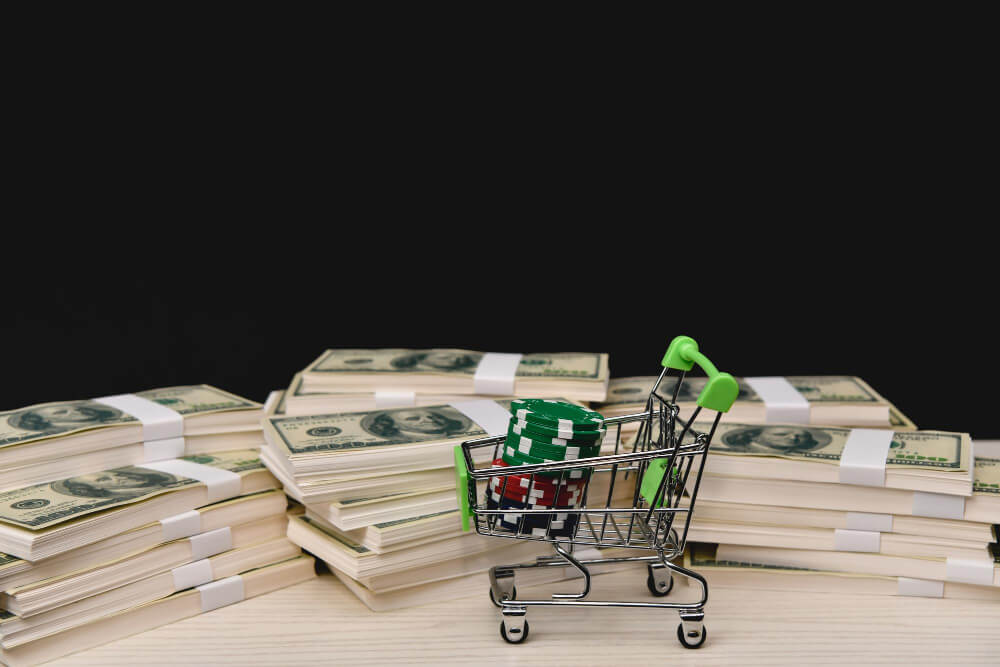
why cash sales is bad

Why “Cash Sales” Was Already Bad

(Before e-Invoicing)

Here are the three biggest problems — written in business-owner language.

01. You cannot see who really buys from you

When all walk-in or ad-hoc buyers get lumped under Cash Sales:

  • You lose visibility of individual buying patterns
  • You may never know who your top spenders are
  • You cannot track lead → quotation → sale → repeat sale

In CRM terms, your entire customer journey goes missing.

If “John Wick” buys RM5,000 from you every month, you won’t know — because the system hides him under “Cash Sales.”

02. You cannot re-market or build loyalty

With no real customer identity:

  • No WhatsApp remarketing
  • No promotions to past buyers
  • No segmentation (VIP, frequent buyers, dormant customers)
  • No birthday or seasonal campaigns

In difficult economies, repeat sales are the cheapest sales.
“Cash Sales” kills that opportunity.

3. You cannot scale a sales team

When everything is keyed under “Cash Sales”:

  • The salesperson’s phone becomes the real CRM
  • Your business becomes dependent on individual staff
  • If they resign, your customers disappear with them
  • Management loses control of pipeline and future sales

That is not scalable.
That is not a business — that is a collection of private relationships.

What Changed in Malaysia’s e-Invoicing Era

What Changed in Malaysia’s e-Invoicing Era

E-Invoicing introduces two important concepts:

  • General TIN “EI00000000010”
  • Classification code 004 – Consolidated e-Invoice

Let’s explain both in simple language.

A. General TIN “EI00000000010” = General Public

LHDN provides general TINs for situations where the buyer:

  • is a member of the public
  • does not provide tax identification
  • is part of many small anonymous retail transactions

In these cases, seller may use the general TIN:
EI00000000010 — General Public

This is valid only for scenarios where the buyer is truly anonymous (e.g., walk-in retail).

B. Classification Code 004 = Consolidated e-Invoice

Under MyInvois SDK’s official classification list, code 004 means:
Consolidated e-Invoice

This is used when a business consolidates many small B2C receipts into one summary e-invoice submission for the day (or period), as allowed under LHDN rules.

Examples:

  • A minimart generating 300 small walk-in receipts a day
  • A café with 500 small cash sales
  • A retail counter with high-volume anonymous transactions

004 is not a “General Public” code.
It is a type of invoice designed for consolidation.

Why the Old “Cash Sales” Habit Is Now Risky

With e-Invoicing, “Cash Sales” is no longer just a bad sales practice — it can become a compliance issue.

Here’s how.

A. Misusing EI00000000010 Can Cause Compliance Problems

LHDN’s guideline expects businesses to:

  • use EI00000000010 only when the buyer is truly anonymous
  • provide buyer name + ID/TIN whenever the seller has the information

If a business always hides behind EI00000000010 even when customer details are known: 

  • submissions may trigger validation errors
  • it raises red flags in audits
  • it suggests misuse of the general TIN

Over-using EI00000000010 is specifically noted as a risk in the guidelines.

B. Misusing Code 004 Is Also Risky

Code 004 is only valid for consolidated e-invoices, not:

  • B2B sales
  • High-value individual sales
  • Named customers
  • Situations where buyer details are known

Incorrectly consolidating invoices that should be individually issued can:

  • violate e-invoicing requirements
  • cause unnecessary audit trails
  • break the ability to issue cancellations or debit/credit notes
  • disrupt customer billing history

C. “Cash Sales” destroys your business intelligence

e-Invoices actually contain meaningful fields:

  • customer name
  • customer address
  • customer contact
  • customer ID/TIN
  • payment method
  • document references

If you keep using “Cash Sales”, you give away all of that value:

  • no CRM identity
  • no lifetime value
  • no pipeline mapping
  • no forecastable revenue
  • no customer loyalty potential

You lose both compliance clarity and sales clarity.

A Better Way: Compliant AND Customer-Friendly

This is where you differentiate yourself as a CRM + e-Invoicing expert.
Below is the “Up Store” method — written in neutral, professional language.

A. Principle: Always Keep the Buyer as a Person in Your CRM

Even if the invoice is submitted using EI00000000010, inside your CRM you keep:

  • buyer name
  • phone number
  • email
  • purchase history
  • lifetime value
  • follow-up tasks

This preserves:

  • remarketing
  • loyalty programs
  • pipeline visibility
  • salesperson accountability
  • customer relationship continuity

The invoice can still be legally compliant — but the relationship belongs to the business, not the salesperson.

B. Compliance Layer: Submit Correctly to LHDN

When a transaction truly qualifies as a general public sale:

  • system submits e-invoice using EI00000000010
  • uses classification code 004 only for consolidated submissions
  • sends correct totals and tax information

This ensures:

  • no misuse of codes
  • no red flags
  • no confusion during audits

C. Why This Is a Win–Win

For LHDN (Compliance)

  • Correct usage of general TIN
  • Correct usage of consolidated e-invoice (code 004)
  • Accurate totals and tax submissions


For the Business (Growth)

  • You keep every customer as a real contact
  • You build a real CRM, not one giant “Cash Sales” bucket
  • You can forecast revenue and cashflow properly
  • You can audit your own sales team
  • You unlock remarketing and loyalty programs
  • You build an asset: your customer database

This is your differentiator line:
Most software solves e-Invoicing by throwing all buyers into “General Public.”
We solve compliance without throwing away your customer list.

How This Ties Back to Your CRM + Cashflow Dashboard

Stop using “Cash Sales” and you unlock:

✔ Better Cashflow Forecasting

You can see who owes you money — not just “unidentified customers.”

✔ Stronger Sales Pipeline

Track buyer journey from lead → quotation → invoice → repeat customer.

✔ Accurate Revenue Insights

Know which customers drive 80% of your business.

✔ Higher Business Valuation

A business with a real customer database is worth far more than one with anonymous sales.

Book Free Assessment
We believe every company is unique with different processes, even within the same industry. We work with our clients to make sure the processes fits your company, instead of the other way around.
LET'S MEET!
phone-handset linkedin facebook pinterest youtube rss twitter instagram facebook-blank rss-blank linkedin-blank pinterest youtube twitter instagram