
Odoo customization can transform your business—but only if change management is taken seriously. Many organizations invest in powerful customizations only to see them fail due to poor planning, weak leadership, or lack of team buy-in. This post explores the most common pitfalls and how to navigate them successfully.
Follow our guide if you want to learn more about WMS in general.
🚀 Part of our comprehensive guide: WMS Implementation Guide Malaysia
Planning, setup, deployment, Odoo customization, and best practices for successful WMS implementation.
The Pitfall:
Many customization projects begin without a clear understanding of what the business is trying to achieve. Teams skip the hard work of defining the gap between current state and desired state, or comparing the extense of features offered by different WMS leading to solutions that don't solve real problems.
Why It Matters:
ERP customization is fundamentally a change of heart and operation. Leadership must not just approve the project—they must understand it deeply and champion it. If the objective is vague (e.g., "make things faster"), the customization will be unfocused and fail to drive ROI.
The Fix:
Define the business objective clearly: "We want to reduce order processing time by 40%" or "We need SST-compliant invoicing to meet LHDN requirements."
Identify the specific pain point or regulatory gap the customization addresses.
Ensure leadership can articulate the "why" to the entire organization.
The Pitfall:
Customizations are rolled out without earning user buy-in. Employees see the change as something imposed on them, not something designed to help them.
Why It Matters:
Resistance to change is psychological, emotional, and political. Fear of incompetence, loss of autonomy, or job displacement drives passive resistance—employees return to spreadsheets, slow-walk adoption, or deliberately avoid the new system. This "silent sabotage" is more damaging than any technical issue.
The Fix:

The Pitfall:
Organizations implement major customizations all at once, forcing users to adapt overnight. This leads to shock, overwhelm, and high error rates during the critical early period.
Why It Matters:
Humans adapt better to incremental change. When users gradually experience new workflows, they have time to internalize changes, report issues early, and build confidence.
The Fix:
The Pitfall:
Few organizations plan for what to do if a customization doesn't work as expected. When things fail, there's no rollback, no contingency, and the business grinds to a halt.
Why It Matters:
Technical or adoption issues can derail even well-intentioned customizations. Without a fallback plan, panic and blame ensue. With one, you can gracefully step back, regroup, and try again.
The Fix:
The Pitfall:
After the customization goes live, organizations rarely measure whether it delivered on its promises. Years later, nobody remembers why a feature exists—it's just overhead.
Why It Matters:
Without metrics, you can't justify ROI, identify what's not working, or plan next steps. You also accumulate "white elephants"—expensive features that nobody uses.
The Fix:
🚀 Explore Our WMS Resources
The Pitfall:
Many organizations overlook critical technical and operational details that derail adoption:
The Fix:
The Pitfall:
Organizations treat Odoo customization as a technical project when it's truly an organizational transformation. They underestimate how deeply embedded legacy processes are and how hard employees will resist.
Why It Matters:
ERP systems expose inefficiencies, centralize data, and remove autonomy. Employees accustomed to informal authority, shadow processes, or workarounds may feel threatened. Without recognizing this, resistance festers.
The Fix:
The Pitfall:
Customization projects expand endlessly: "While we're at it, let's add this feature…" Scope balloons, timelines slip, costs multiply, and the original objective gets lost.
Why It Matters:
Each additional feature increases complexity, upgrade risk, and maintenance burden. By the time the project launches, half the features go unused because requirements shifted.
The Fix:
The Pitfall:
Organizations customize Odoo but fail to clean and validate their data before migration. Corrupted or incomplete data in the ERP corrupts all downstream decisions.
Why It Matters:
If customer master data is incomplete, supply chain dashboards are useless. If product codes are inconsistent, reports are misleading. Users lose trust in the system.
The Fix:
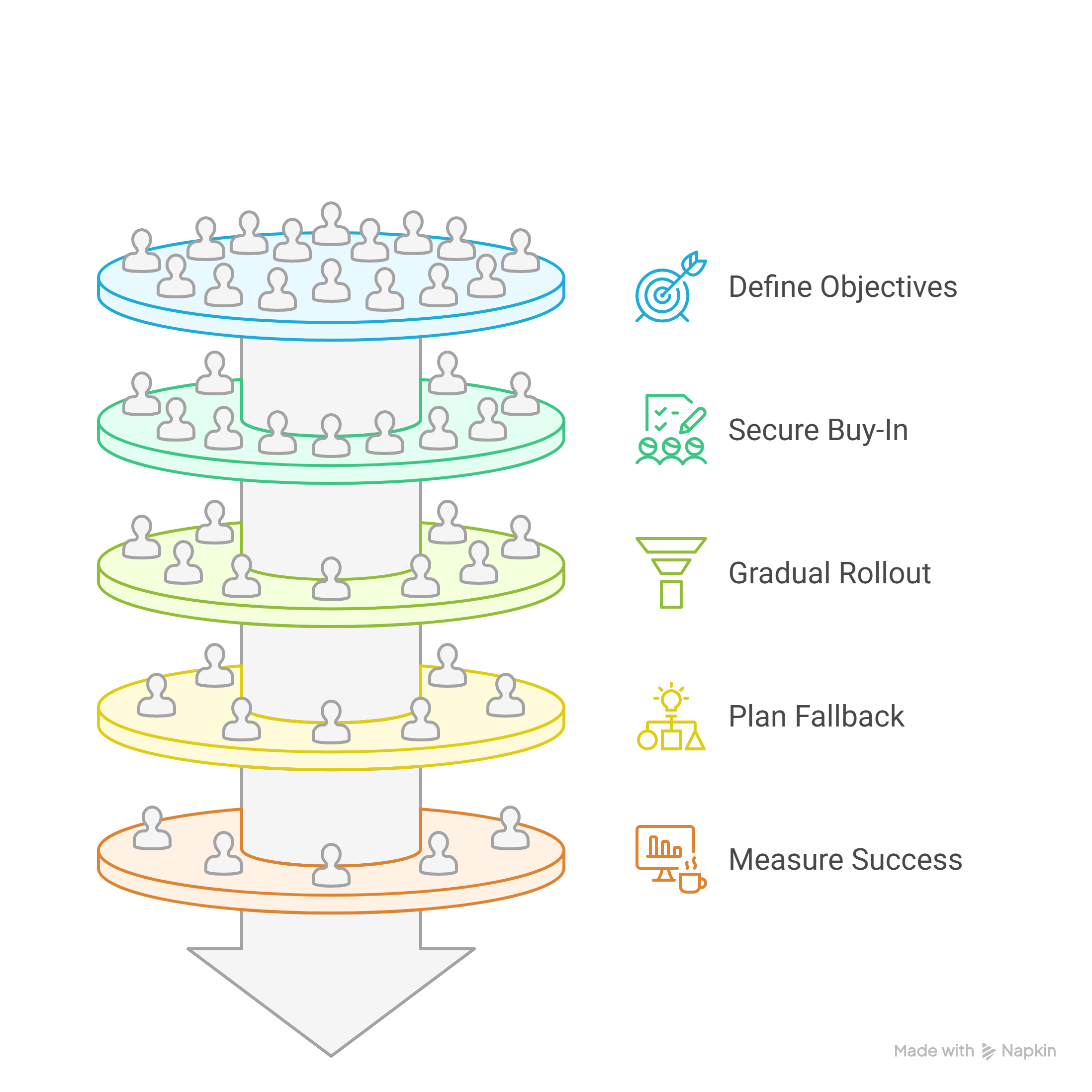
While this article was attentioned towards Odoo customization , it is applicable to all aspects of life and business when attempting a change. The most successful Odoo customizations aren't the most technically sophisticated—they're the ones backed by clear objectives, strong leadership, gradual adoption, and rigorous measurement. Treat customization as an organizational change initiative first and a technical project second.
Key Takeaways:
Considering an Odoo customization? We've seen both successes and failures. Let's discuss your objectives, your team's readiness, and how to navigate change management to ensure your customization delivers real business value.

